

Installing an EV charger in Melbourne isn’t like adding a power point. A home charger (Level 2 AC) draws 7kW or more continuously for hours — roughly the same load as running a large air conditioner non-stop overnight. Get it wrong and you’re looking at tripped circuits, burnt cabling, voided insurance, and in the worst case an electrical fire in your garage.
In Australia, a person who is not a licensed electrician is legally not permitted to install an EV charger — the same rule that applies to any fixed electrical equipment. That’s the baseline. But “licensed electrician” and “certified EV charger installer” aren’t quite the same thing, and knowing the difference is where most Melbourne homeowners get caught out.
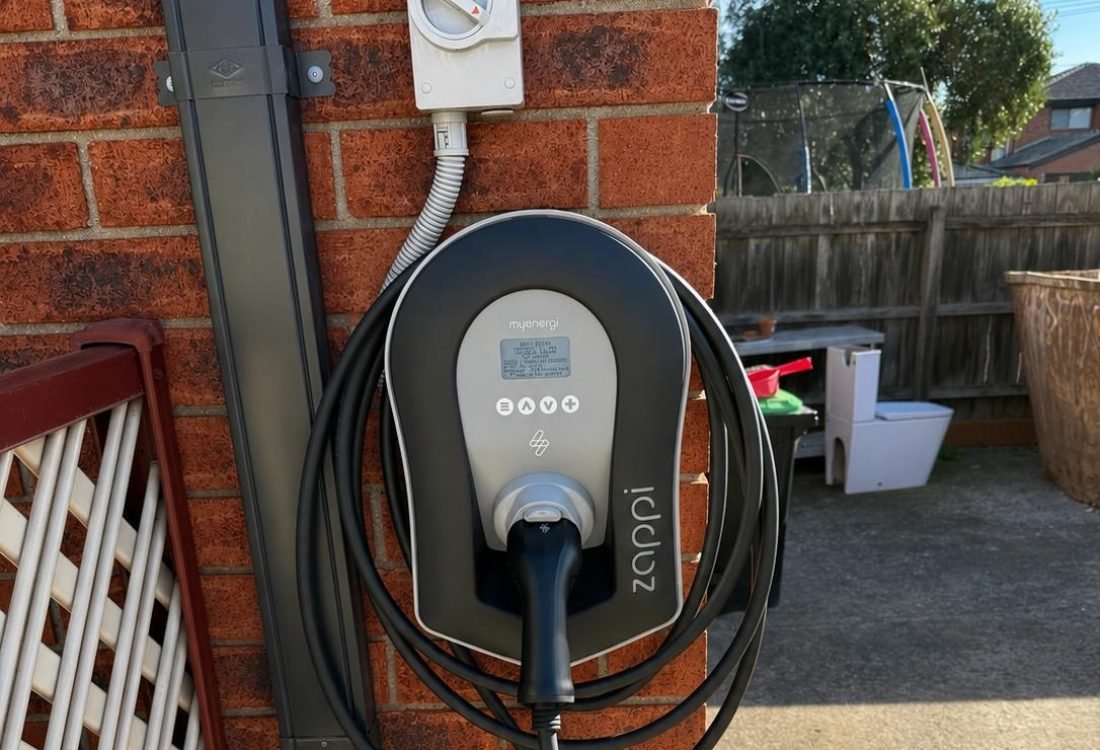
What “Certified” Actually Means in Victoria
There’s no single national “EV charger installer licence” in Australia. Instead, certification is a stack of things layered on top of a standard electrical licence:
This is non-negotiable. Your installer must hold a valid A-Grade electrical licence issued in Victoria. You can verify this yourself through Energy Safe Victoria’s licensing register — a legitimate installer will happily give you their licence number and won’t be offended when you check it.
The Australian/New Zealand Wiring Rules govern how any electrical installation must be done. A compliant EV charger installation means correct cable sizing, proper circuit protection (an RCBO or RCD is required for domestic EV installations), a suitable isolation point, and earthing that accounts for the sustained load of vehicle charging.
3
Manufacturer accreditation or training
Many EV charger brands — Zappi, Wallbox, ABB, Tesla and others — run their own installer accreditation programs. This isn’t legally required, but it matters practically: accredited installers get better technical support, faster warranty resolution, and firmware-level knowledge of the unit they’re fitting to your wall.
If you have rooftop solar, or you’re planning to add it, the installation touches AS/NZS 4777 for grid-connected inverter systems and often a CT clamp or energy meter wired back to your switchboard. This is where general electricians without EV experience most often come unstuck.
Ask specifically about public liability and professional indemnity cover. A licensed installer without insurance leaves you exposed if something fails.
The Questions Worth Asking Before You Book
A certified EV charger installer will answer all of these without hesitation. If someone dodges them, keep looking.
Switchboard Capacity: The Real Make-or-Break Factor
This is the single most common reason an EV charger installation in Melbourne costs more than expected — and the most common reason a cheap quote turns into an awkward conversation.
Adding a 7.4kW charger to a typical single-phase home is a substantial new load. In many Bayside and South East Melbourne homes — particularly older properties in suburbs like Mentone, Cheltenham, Hampton and Brighton — the existing switchboard is already close to capacity, may lack safety switches on every circuit, and in some cases is a legacy fuse box rather than a modern circuit breaker board.
Depending on what’s found during the site assessment, your installation may need:
A certified installer will identify all of this during the site visit and quote it upfront. An installer who quotes a flat fee without inspecting is either guessing, or planning to surprise you later.
Charger Types You’ll Be Choosing Between
Understanding your options makes the installer conversation far more productive.
Charger Type | Typical Use | Notes |
Level 1 (portable) | Occasional top-ups | Plugs into a standard outlet; can take 24 hours or more for a full charge |
Level 2 (AC, wall-mounted) | Most homes | Dedicated circuit required; charges overnight; 7kW single-phase or up to 22kW three-phase |
Smart / solar-integrated | Homes with solar | App scheduling, energy monitoring, surplus-solar charging |
For most Melbourne households, a 7kW Level 2 charger is more than adequate. If you drive under 60km a day — which covers the vast majority of commutes across Bayside and the South East — an overnight charge on a 7kW unit will keep you topped up comfortably.
Cost Expectations in Melbourne
Realistic pricing varies with your home’s electrical setup, the distance from switchboard to charger, and whether an upgrade is required. As a general guide:
Be cautious of quotes significantly below these ranges — they usually mean either a substandard unit, no proper load assessment, or corners cut on cabling and protection.
Are There Rebates Available in Victoria?
Worth addressing directly, because there’s a lot of outdated information circulating.
Victoria’s Zero Emissions Vehicle subsidy program — which included charging infrastructure support — ended on 30 June 2023. There is currently no active Victorian state government rebate specifically for residential EV charger installation.
There is a federal DRIVEN Charger Rebate Stream running from 2026 to 2029, but it targets automotive dealerships and EV repairers, not households.
That doesn’t mean there’s no financial upside. The real savings come from:
Your installer should be able to explain how a smart charger integrates with your existing solar setup and how to schedule charging for the cheapest tariff window.
Where to Find Certified Installers in Bayside and Melbourne’s South East
Local specialist electricians are almost always the better route for residential work. A business that operates within a tight radius knows the housing stock — the older wiring in Beaumaris and Black Rock, the newer estates in Dingley Village and Oakleigh, the switchboard quirks common to each. They can get to you quickly if something needs attention after the install.
Word of mouth remains genuinely effective here. Neighbours who’ve had a charger fitted will tell you honestly whether the installer was punctual, tidy, and clear about costs.
Google reviews are worth reading carefully — not just the star rating, but the pattern of comments. An installer whose reviews repeatedly mention clear quoting, tidy workmanship and follow-up support is a safer bet than one with a high score and vague feedback.
Service directories like Hipages and Oneflare can be useful for gathering multiple quotes quickly, but they’re a starting point, not a filter. You still need to verify the licence independently.
Red Flags to Walk Away From
What a Good Installation Looks Like End to End
A properly handled job runs roughly like this: you enquire, they ask about your vehicle and driving habits, they book a site assessment, they walk you through your switchboard and options on the day, they provide a written quote itemising the charger, labour, and any upgrade work, they install and commission the unit, they configure the app and any solar integration, and they lodge the Certificate of Electrical Safety and hand you the documentation. Then, ideally, they’re reachable if you have questions a month later.
Local Coverage Across Bayside and the South East
For homeowners in Mentone, Cheltenham, Parkdale, Mordialloc, Beaumaris, Black Rock, Sandringham, Hampton, Brighton, Brighton East, Highett, Bentleigh, Moorabbin, Dingley Village, Oakleigh and the surrounding suburbs, choosing an installer who works locally makes a practical difference — both for the site assessment and for any post-installation support.
Frequently Asked Questions
Do I need council approval for a home EV charger in Melbourne?
In most cases, no. A standard residential charger installation on a detached home is generally treated as exempt development. If you live in an apartment or an owners corporation property, you’ll need to check body corporate rules — this is an area where Victorian legislation is notably stricter than in other states.
Do I need three-phase power for an EV charger?
No. Single-phase supports 7kW charging, which suits most households. Three-phase unlocks faster charging if you have a long commute or two EVs, but it’s not essential.
Can I use my existing solar panels with an EV charger?
Yes, and it’s one of the best reasons to install a smart charger. An installer can configure the charger to prioritise surplus solar generation and schedule charging around off-peak windows.
How long does installation take?
A straightforward install is typically a few hours. If a switchboard upgrade or three-phase conversion is needed, plan for longer.
Will my charger work with any EV
Level 2 AC chargers use a standard Type 2 connector in Australia and work across essentially all EVs sold here. Smart features and app integration vary by brand. Choosing a certified installer is the difference between a charger that quietly works for a decade and one that becomes an ongoing problem. Verify the licence, insist on a site assessment, and make sure you get your Certificate of Electrical Safety.
Haven Electrical services homes throughout Bayside and Melbourne’s South East, handling EV charger installation alongside switchboard upgrades, induction cooktop installation, lighting and powerpoints. You can see their full service range and get a quote directly, or call 0437 376 562.

Expert electricians for your home. Licensed, reliable electrical services across Melbourne's South East. We turn up on time, every time.